

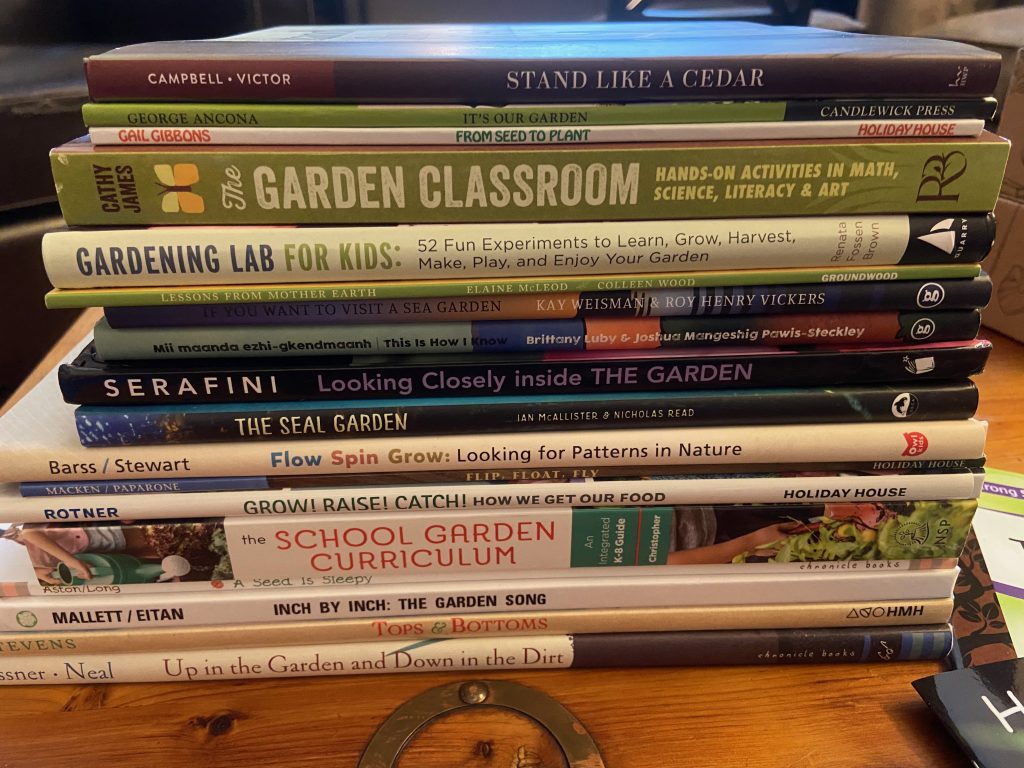
Research consistently shows mentorship from a qualified and capable colleague is most effective for building capacity for outdoor play and learning. The reality is many teachers do not have access to co-teaching opportunities or expensive conference attendance. This post is a compilation of books that have inspired my own personal growth and pedagogical practice as a teacher teaching outdoors. Whether you are new to the idea of teaching outside, or a seasoned pro, these books might inspire, or remind you of, ways to build your professional practice.
This post contains affiliate links. When you make a purchase, you are supporting this blog without any extra cost to you. Thank you for your support!
Understanding the Basics
These books are considered guiding texts in the field. Much of what you see in current dialogue and publications comes from ideas first published in these texts.
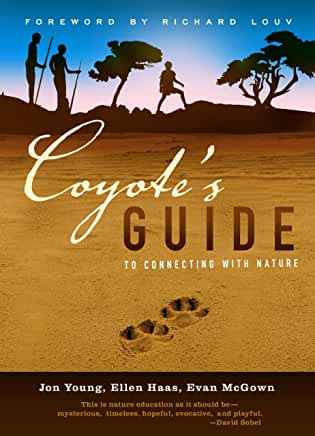
Coyote’s Guide to Connecting with Nature by John Young, Ellen Haas, and Evan McGowan. Written to become a blueprint for your own context, this guide is an essential read for anyone keen to understand the allure of teaching and learning outdoors. Read this book to learn more about how to facilitate meaningful connections by observing the edges of childrens’ comforts, awareness, knowledge, and experiences with core routines, story, and seasonal change. If you are particularly interested in the Forest School Movement, you will find this text helpful. Buy it here.
Last Child in the Woods by Richard Louv. This is a good book to start with if you are unsure what all the fuss is about and want to understand how the movement to get more kids outdoors started. Last Child in the Woods is widely considered the spark that ignited the modern child and nature movement. Louv supports the Children and Nature Network, which offers an annual ‘Nature Everywhere’ conference and online resources accessible here: ChildrenandNature.org
His follow up book is titled Vitamin N and is another easy to read compilation of over 500 ideas for kids and adults to connect playfully, while getting their daily dose of vitamin (N)ature.
If you are a grad student, or otherwise interested in the research that is making the case for children and nature, the C&NN website also hosts an excellent research library. You can access it here: Research Library
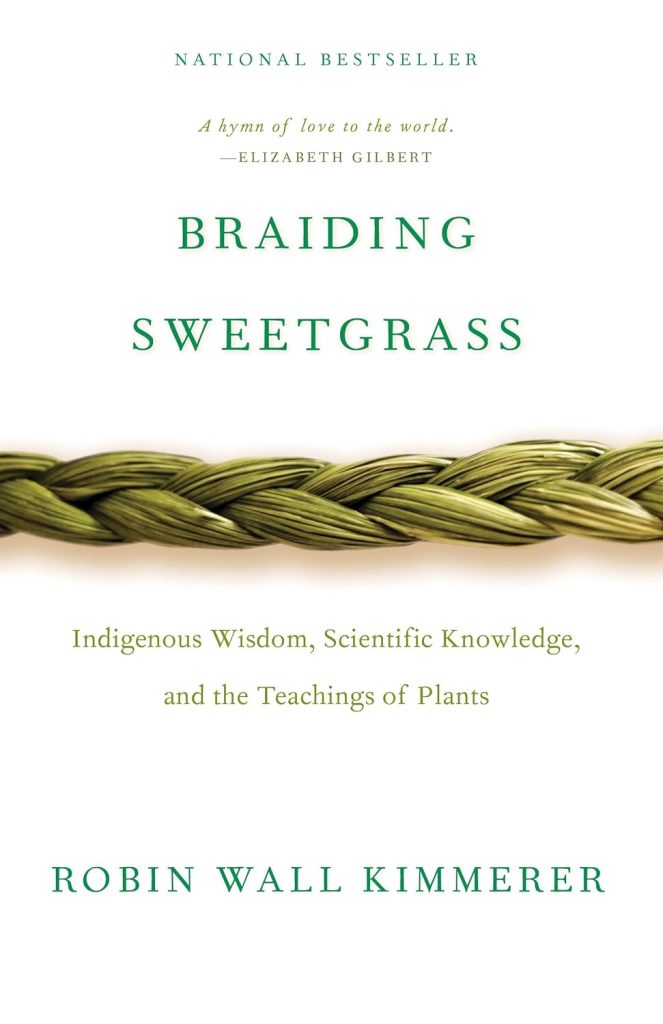
Braiding Sweetgrass by Robin Wall Kimmerer. This is a gorgeous read that will leave you inspired and motivated to more meaningfully connect to your place in the world. Written by an indigenous botanist, Braiding Sweetgrass invites you to learn from the earth, look closely, and braid the connecting threads of your own lived experiences with the settler histories of your place. This book is as poetic as it is educational. A must read for any educator who wants to seriously improve their ability to reflectively teach in nature. Buy it here.
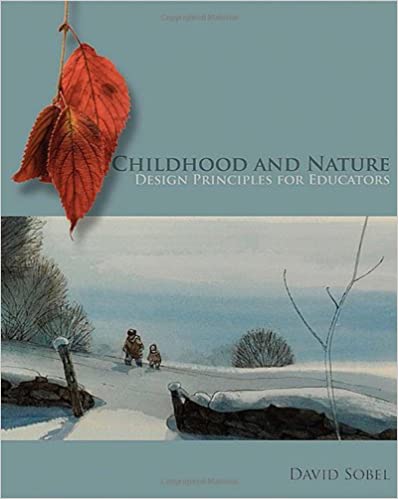
Childhood and Nature: Design Principles for Educators by David Sobel.
Sobel is an essential read for teachers in the planning stages. This text describes 7 play themes that emerge in outdoor play amongst children of all ages. These play schemas serve to influence how we design our outdoor spaces when we intend to cultivate children’s relationships with nature. I recommend this book as essential reading for educators wanting to dig deeper into a cross-curricular pedagogy of playful learning outdoors. Buy it here.
Children learning outside the classroom by Sue Waite. This text is everything you need for a general overview of the rationale and justification for taking children outdoors to learn across the curriculum. From beginners to experts, everyone will find a nugget of wisdom encompassing topics as varied as methods of assessment, to global views of learning outside the classroom. Buy it here.
Balanced and Barefoot by Angela Hanscom. This is the first book you should read if you need clarity on why it is important to get kids outside everyday to play and learn. Written by an occupational therapist, this text provides you with unflinching data on the disturbing rise of sedentary childhoods, and the dire consequences that are emerging. If you are a nervous educator or parent concerned that children might get hurt playing outdoors, this is a necessary read to help you re-frame your thinking around the benefits that outweigh the risks of injury in unstructured outdoor play in our schools and neighbourhoods. Buy it here.
Current Research
Embracing Risky Play at School introduces readers to outdoor play and learning (OPAL) in the kindergarten to middle school years, explains the difference between risks and hazards, presents the concept of “Yes” spaces, and describes how and why risky play supports academic development and student well-being. The Canadian Pediatric Society recommends risky play as a preventative measure for childhood obesity, anxiety, and behavioral issues, and schools have an important role to play in providing access to the unique benefits of risky outdoor play. Buy it here.
Outdoor Learning Across the Curriculum: Theory and Guidelines for Practice by Simon Beames, Peter Higgins & Robbie Nicol. This text is an updated version of the 2012 book with four entirely new chapters. It is an excellent read for anyone interested in how to systematically incorporate meaningful outdoor learning opportunities into their daily teaching activities. This book clearly makes a case for how outdoor learning experiences benefit children and young people’s academic development and health and wellbeing. Buy it here.
Practical Advice for Teachers
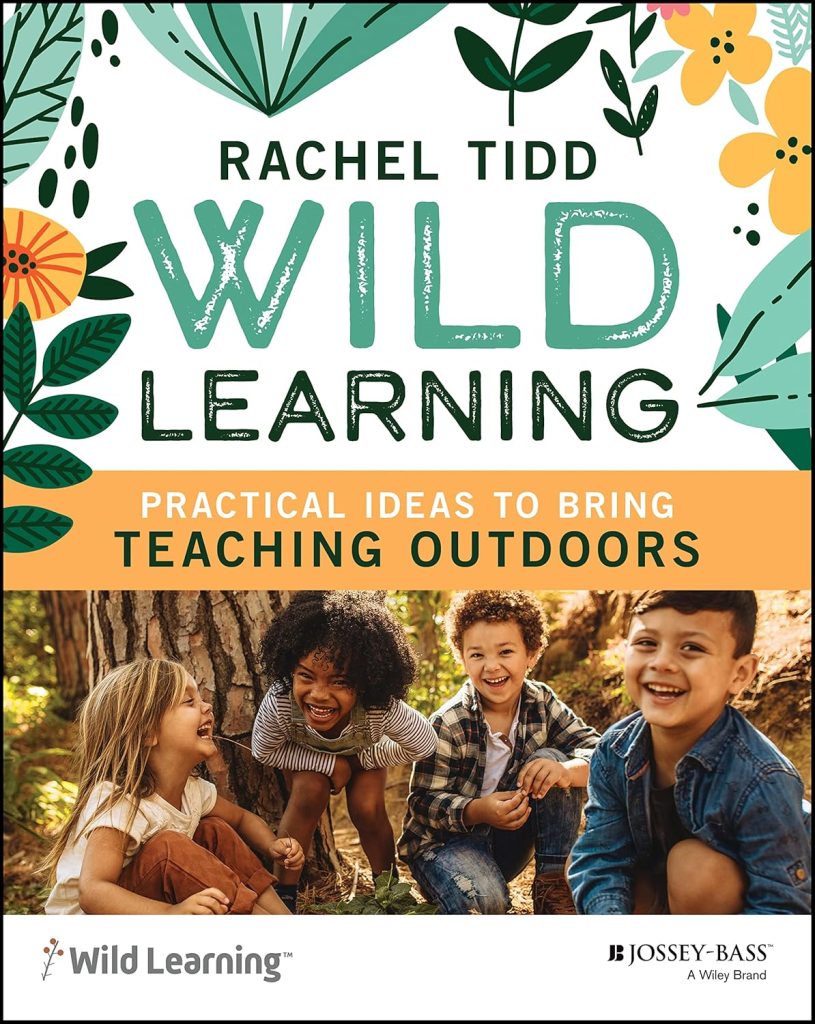
Wild Learning by Rachel Tidd. This book is my go-to for rigorous implementation of literacy and math outdoors. Tasks are presented in an accessible way so teachers can adapt criteria to meet required learning outcomes. Buy it here.
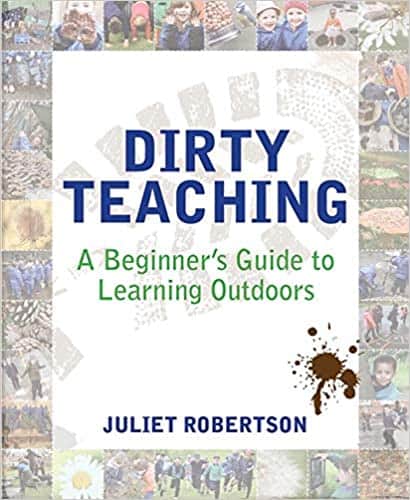
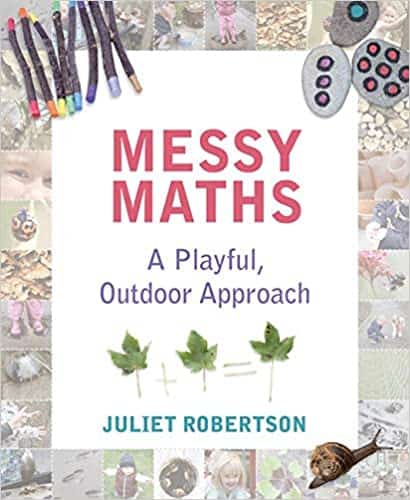
Dirt Teaching and Messy Maths by Juliet Robertson. I’d be hard pressed to find examples of current practice that did not originate from some facet of Juliet’s work. These are my go-to books for inspiration and practical ideas. Written primarily for working with younger learners, experienced educators will certainly be able to adapt ideas presented to extend learning along the age span to intermediate grades. These books are perfect for establishing high yield routines that improve meaningful participation with students of all ages! Buy them here.
The School Garden Curriculum by Kaci Rae Christopher. If you are keen to get growing in a school garden and are looking for ways to teach across the curriculum beyond the preschool years, this book offers a framework for thinking about school gardens as a shared place of learning in our schools, regardless of where you live. The book offers hundreds of lesson plans as well as resources and is a good place to start for beginner school gardeners looking to develop an ethic of environmental care in their students. Buy it here.
I have a huge stack of books to write about still. If you have a book you would like me to review, or a book that has been specifically important for you in your professional work, please contact me here and tell me all about it!