

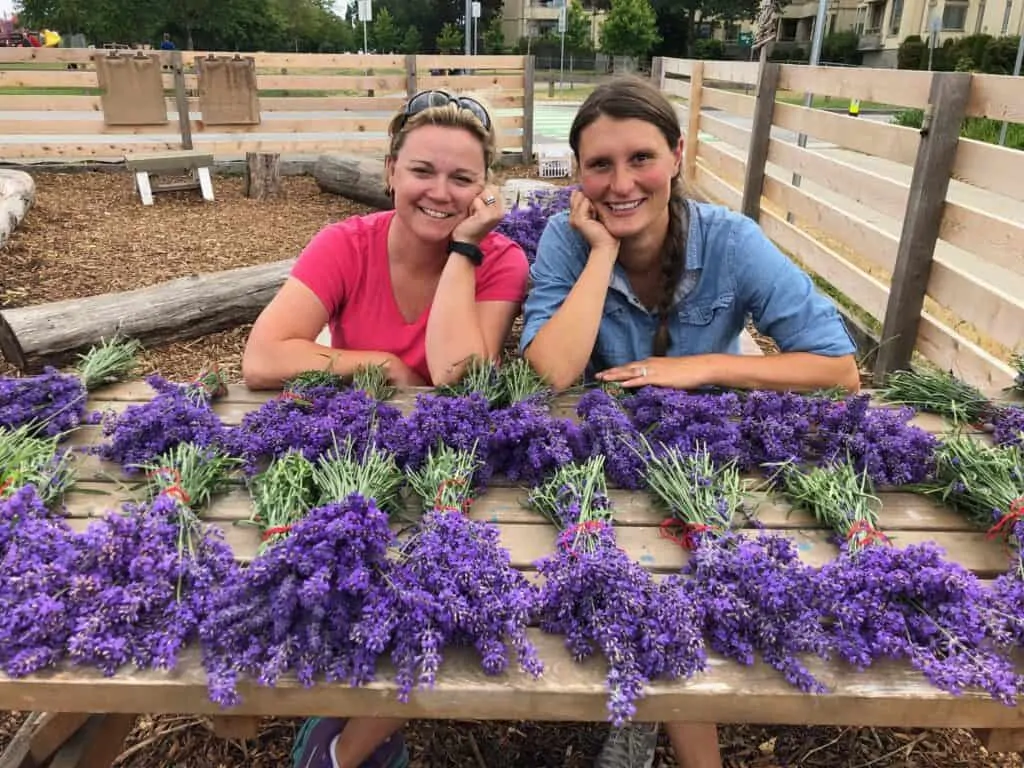
My role as a teacher is always evolving. For 25 years I taught just about every grade in public elementary schools across two provinces. For almost a decade, my role was teaching prep outside. My outdoor play and learning (OPAL) position emerged through an innovative re-think of how we allocate existing prep time protected by our collective agreement. In my jurisdiction, teacher prep time is guaranteed by the union, but how that time is allocated is up to schools! I’ve since moved on to district and provincial roles and responsibilities, but for many years I enjoyed an innovative job share with the very best-of-the best in outdoor learning, Sarah Regan. For anyone unfamiliar with what prep is, and how it works in a unionized teaching environment, it is a non-enrolling teaching position in a public elementary school.
As prep teachers, Sarah and I got to co-teach entirely outdoors from 8:45- 2:45 daily with a new class of students coming to learn in the garden every 55 minutes. With the OPAL prep model, each classroom receives several hours of learning outdoors, year-round, in all weather conditions. If the goal is to get more kids outdoors more often, the outdoor prep position is an effective and sustainable way to meet this goal!
Teaching Prep Outside- the gear library
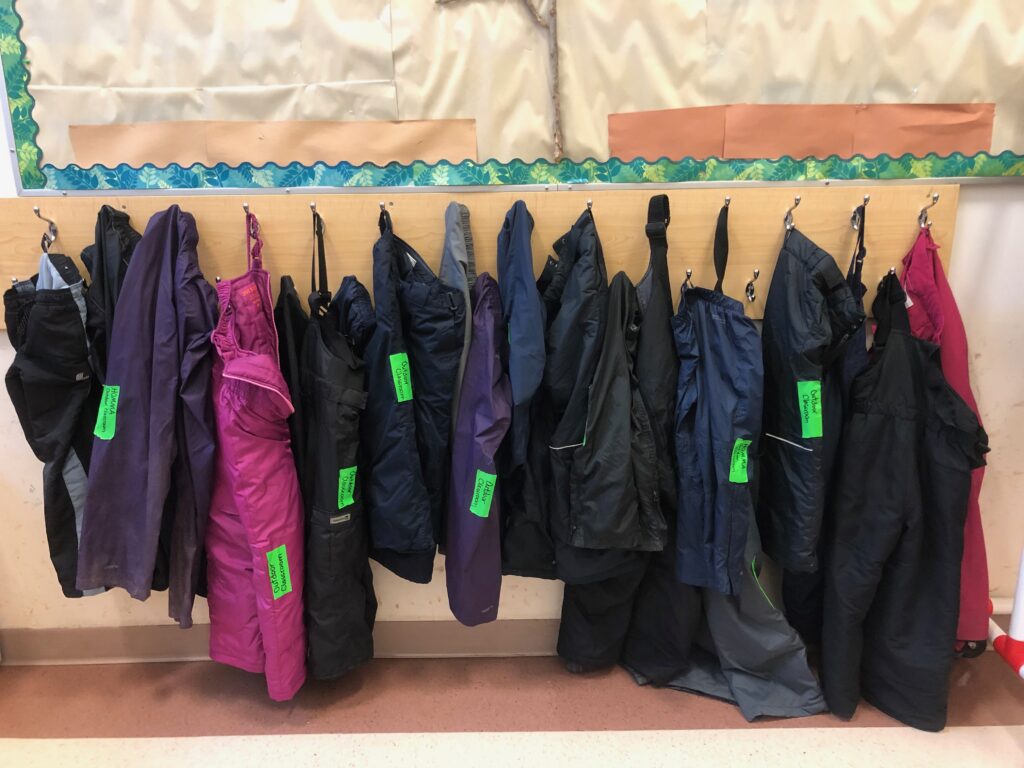
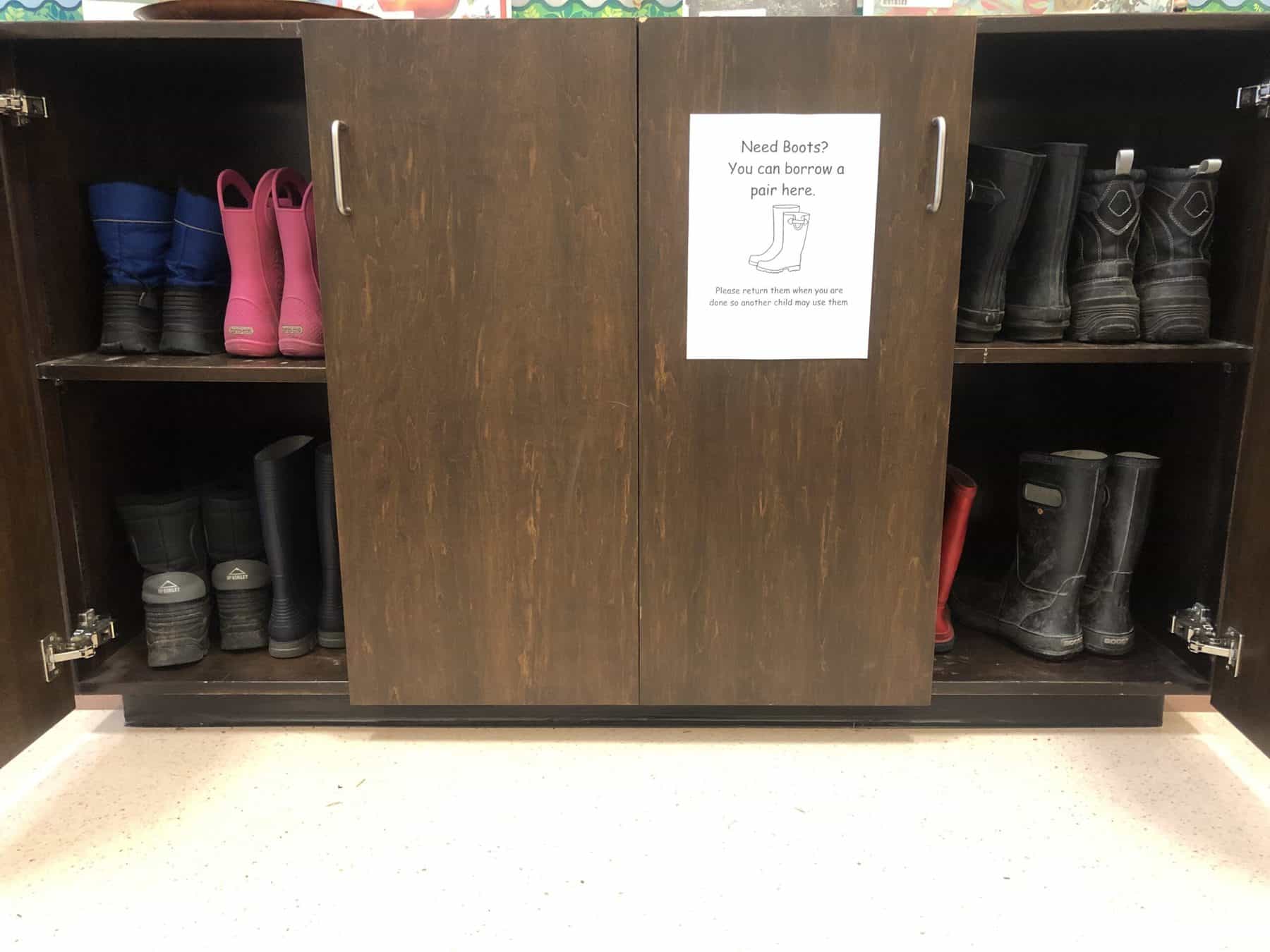
To help facilitate everyone’s comfort learning outdoors we started a lending library of boots, rain pants, and rain jackets. Children and families are welcome to borrow what they need, with the understanding they will return borrowed items when they are done with them, and encouraged to make a donation to the collection at some point. Some children borrow items for the entire year, some borrow items for a day if they forgot their gear at home. Most children come dressed for the weather conditions, some choose not to, but every child is offered a reasonable alternative if they are not dressed for OPAL. Our collection has mainly grown from salvaged lost and found items, donations from families, and targeted purchases to fill in the gaps. Neon duct tape on all items helps teachers identify which gear needs to be returned to the gear library when they find items abandoned in coat rooms!
Teaching Prep Outside- planning for instruction
Our planning is emergent and responsive to seasonal learning unique to our outdoor learning environment. Emergent learning means we still have a year plan, term plans, and even monthly plans for what we expect to teach in the outdoor and garden classroom, but also that we are open to the learning that emerges via ‘teachable moments’. Emergent learning includes weather phenomenon, seasonal change, and the wonders and curiosity of our students. We have found this approach results in even more learning standards being meaningfully explored than if we stick to a pre-determined lesson or unit plans. Emergent learning provides context and valuable background knowledge that can be referenced and revisited as you make your way through required curriculum!
Our School Garden Classroom
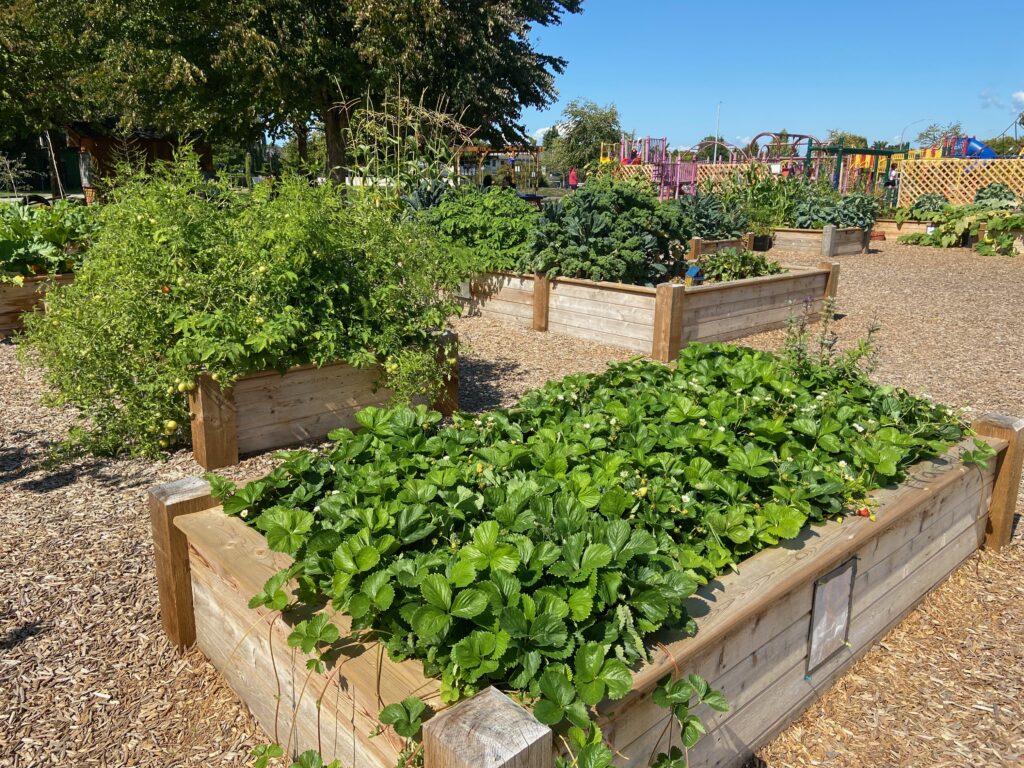
We use the terms outdoor classroom and garden classroom interchangeably since the school garden is an integrated part of our outdoor classroom. During the growing and harvest seasons our daily work is focussed on the garden, and the multiple entry points for learning it provides across the curriculum. A big focus of our work revolves around food literacy and environmental sustainability within a framework of nature play. We believe strongly in the importance of play in children’s gardens and that no garden should be so precious that children are not free to play in it. Play is the plate on which we serve all academic learning, and if we want children to feel attached to the garden, care about the crops we grow, and become sustainable stewards of our environment, then they need room to play within the school garden. Here are some links to related posts about how we support play in the school garden:
RELATED POST: HOW TO BUILD A DINOSAUR GARDEN
RELATED POST: HOW TO BUILD A BUG HOTEL
RELATED POST: HOW TO BUILD A FAIRY GARDEN
Teaching Prep Outside- designing for instruction
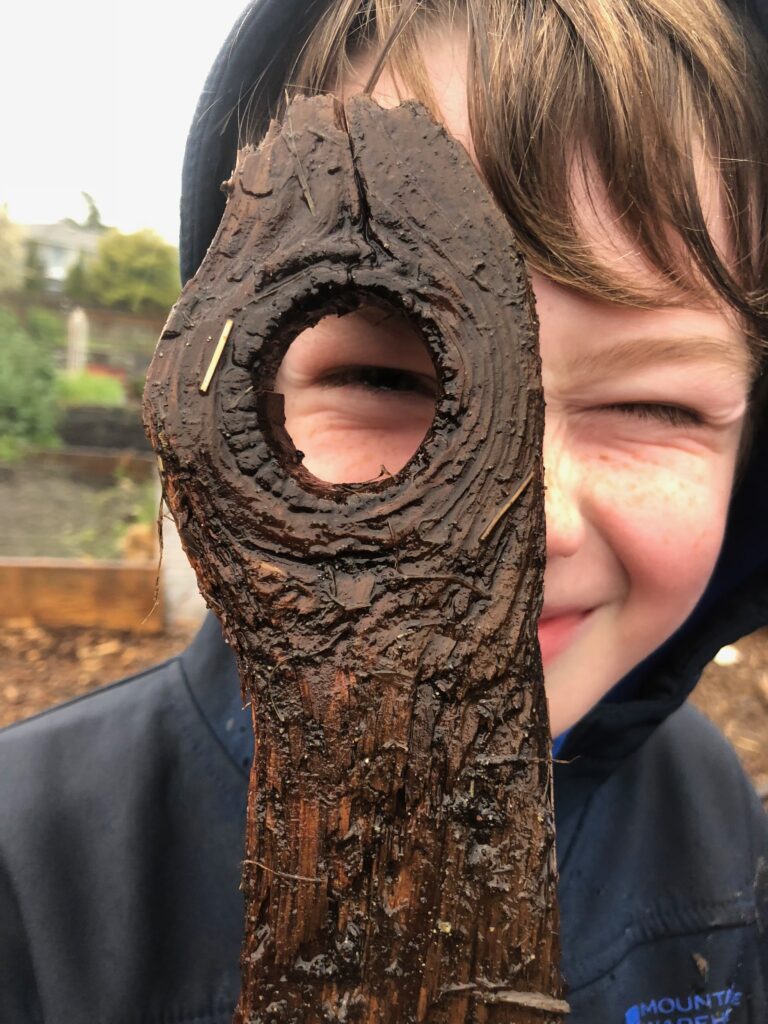
When we first began teaching outdoors, we did not have a shed or tables, which made it challenging to haul garden and teaching supplies back and forth daily. We now have four tables that were built by our grade 6/7 classes as part of an ADST unit and a shed that was built by parent volunteers. We also have rain barrels and hoses long enough to reach the furthest corners of the garden during the summer months. Funding for these projects changes yearly, and an up-to-date list of available school garden grants can be found here.
RELATED POST: BC SCHOOL GARDEN GRANTS
Teaching Prep Outdoors- building your school’s play culture
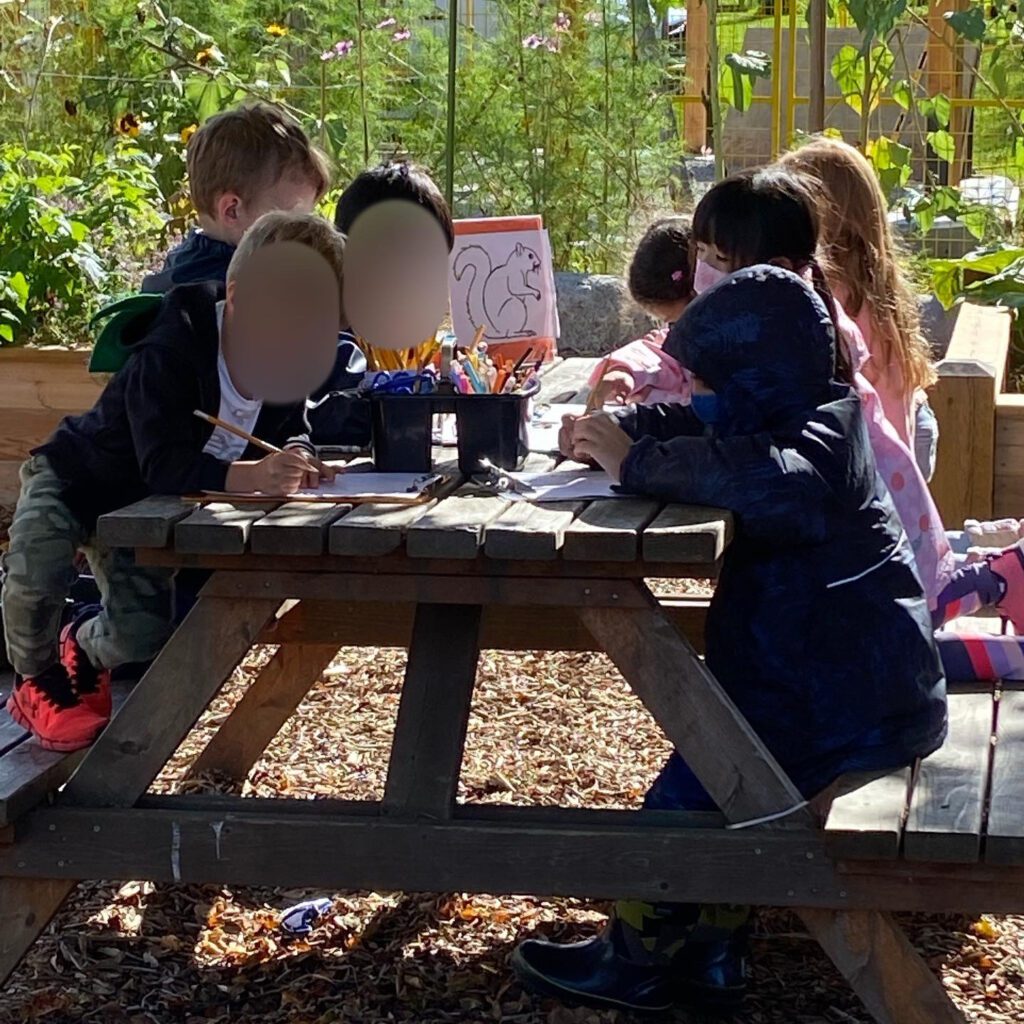
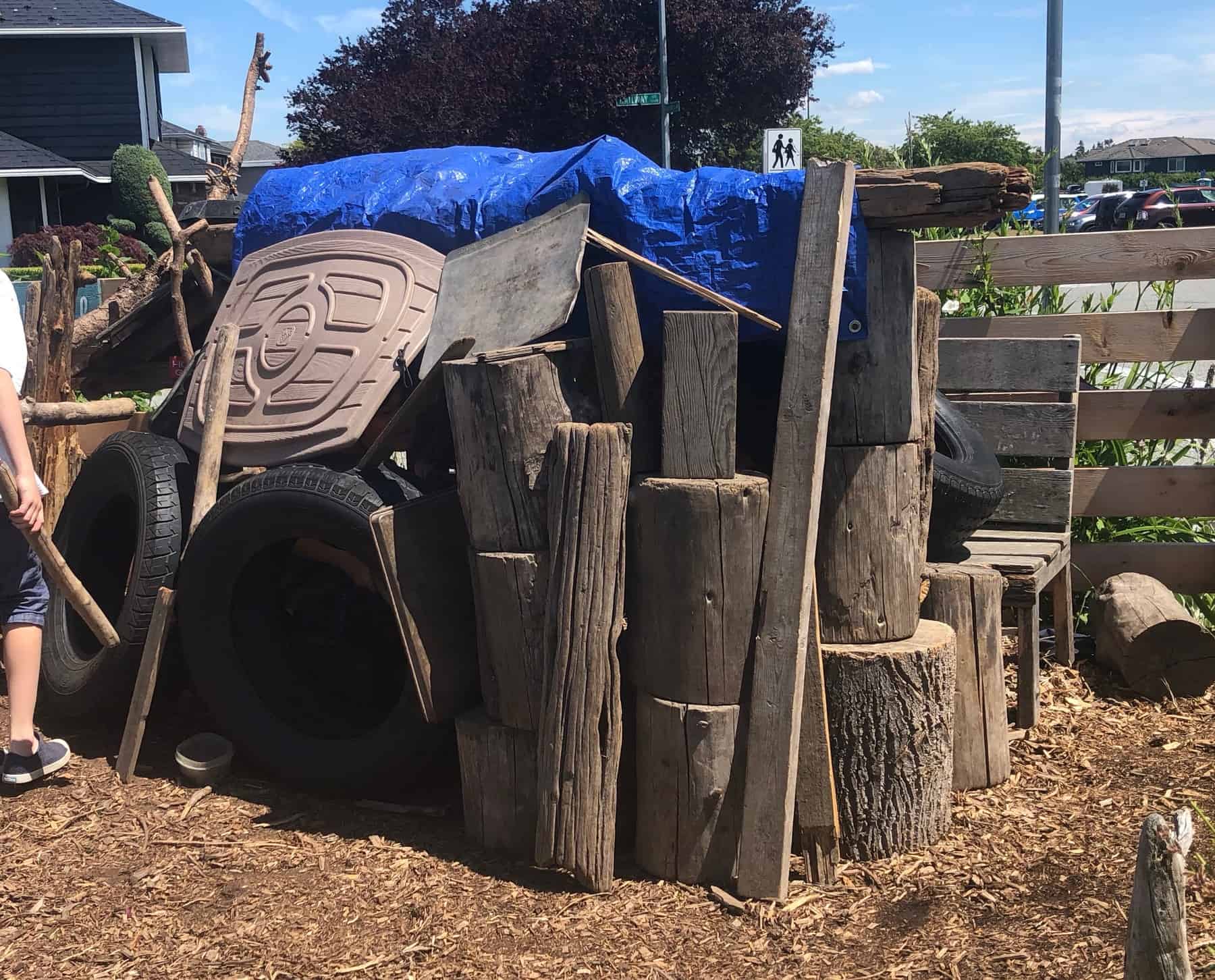
The children are entirely responsible for the planting, watering, and harvesting of our school garden. They do an amazing job too, but the school year does not line up exactly with the growing season, so much of our winter months are spent playing outside. As such, we have developed cross-curricular nature play opportunities that are very popular with the students, and have been successful in reducing many of the issues public gardens face. For example, we leave most of our large and small loose parts out for the community to enjoy outside of school hours. This means our play areas have families and children visiting them on weekends, evenings, and during summer breaks. The benefit of this is a significant reduction in vandalism and theft from our school gardens. Here are some related posts about how we support loose parts play in the garden:
RELATED POST: HOW TO BUILD A MUD KITCHEN
RELATED POST: BEST BOOKS FOR INTRODUCING LOOSE PARTS OUTSIDE
RELATED POST: RISKY PLAY WITH TOOLS
Questions About Teaching Prep Outside
We receive many questions from teachers and schools considering this model of how we allocate prep time. Here are some common questions:
Do you provide report card comments for teachers?
Yes. In consultation with the teacher, we provide a bank of comments with proficiency statements for multiple subject areas. Teachers can choose which data they would like to include in their final report. When online portfolios were being piloted, we would upload evidence of learning and images to the portal so children could reflect on their learning outdoors and parents could respond.
What happens to the garden in the summer?
We have an online sign up for families who are interested in caring for the garden during the summer months. Usually one or two families take on a single week of garden care each during the summer. Families are asked to water the garden, tidy up the play areas, stay on top of the weeding, and maintain a presence in the garden during the summer. We plant strategically so most of the harvest happens before the last day of June. Crops planted for a fall harvest include pumpkins, corn, and apples.
What do you do in the rain?
We do not have an indoor classroom to teach in so we go outside, no matter what! Sarah and I have really good rain gear for teaching outside all day and the kids are offered rain gear if they are not prepared for the weather. There is lots to do in the rain, maybe one day I’ll write an entire book of ideas! One of our favourite rainy day activities is to set up a tarp and read quietly. Most of our students have never been camping, or at least don’t go camping in the rain, so sitting under a tarp and reading a story, while listening to the rain fall is a pretty magical experience for them. Here is a post I wrote on how to play in the rain, and here is one with all of my favourite books about the rain.
Learn More!
Do you have more questions about how teaching outside all day looks? Contact me here and I’ll add your question to the list! Did you know I’ve written a book about risky play in schools? Order yours here.