

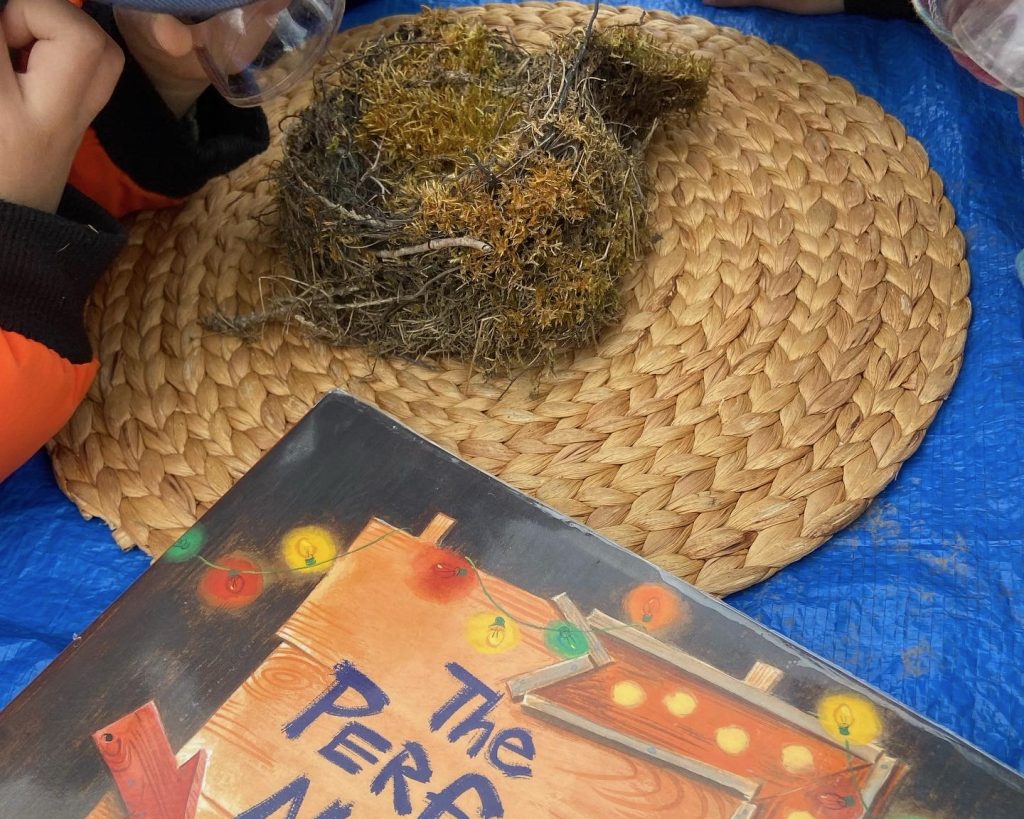
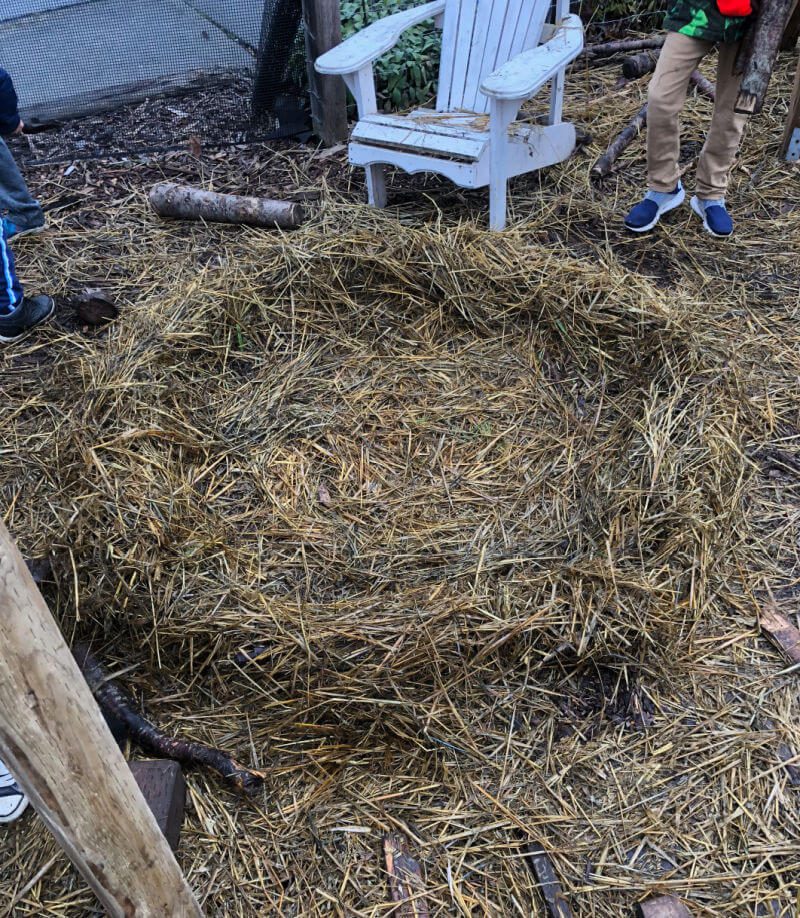
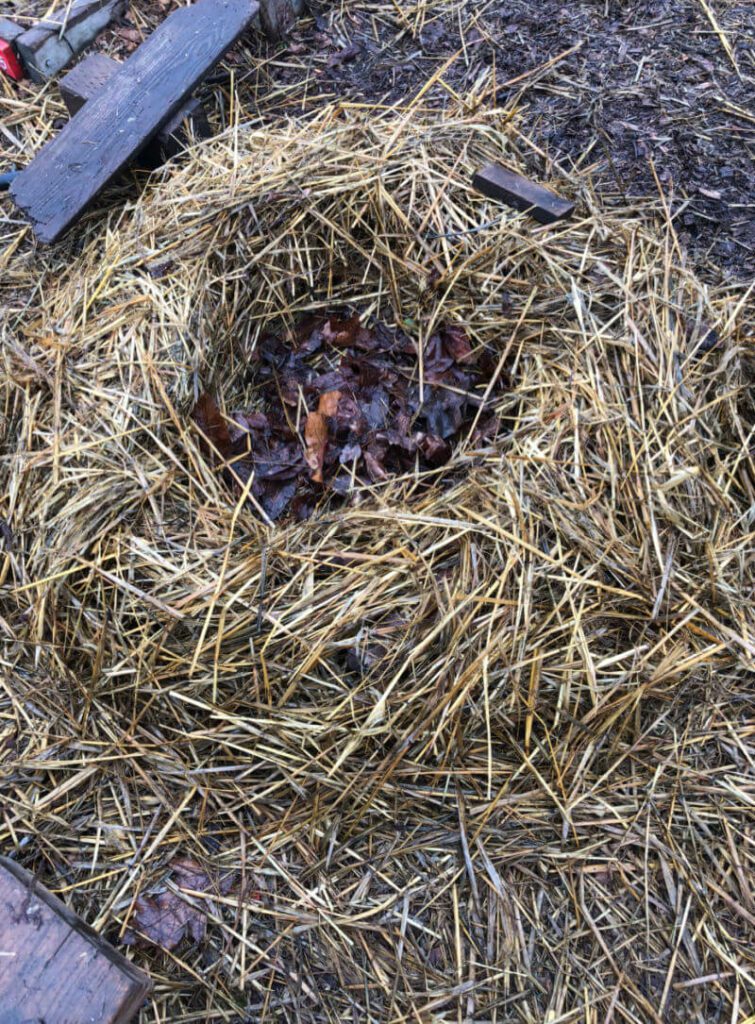
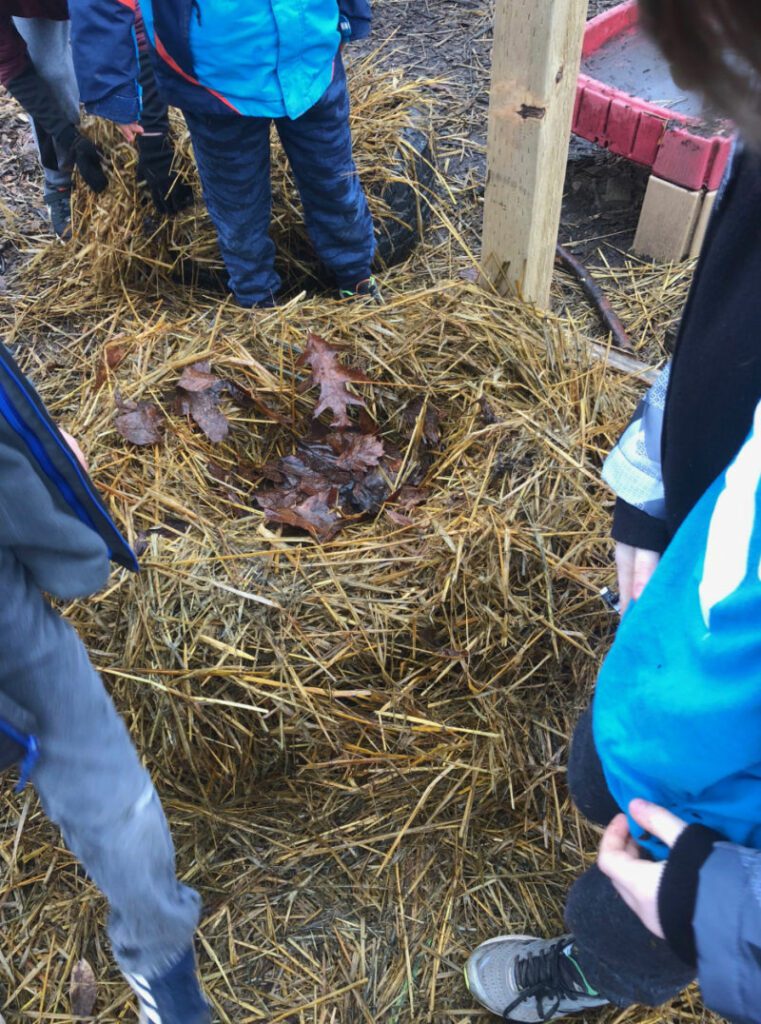
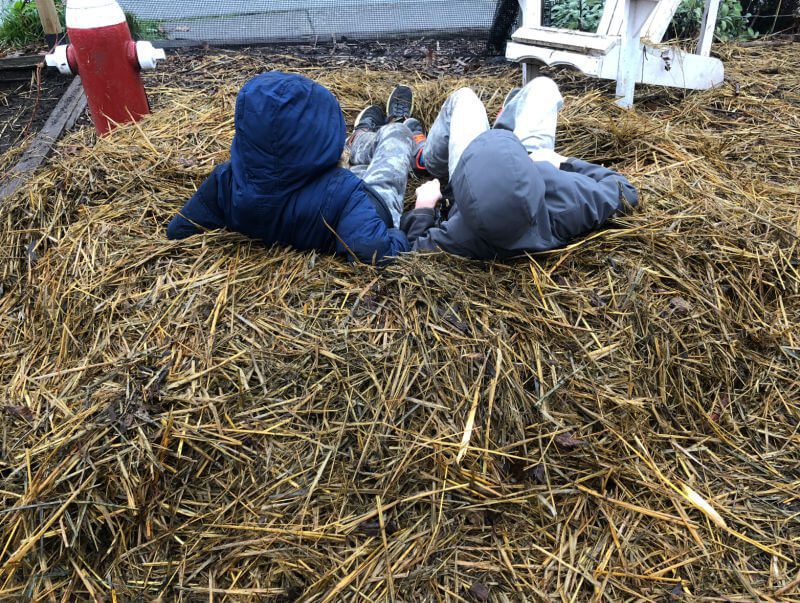
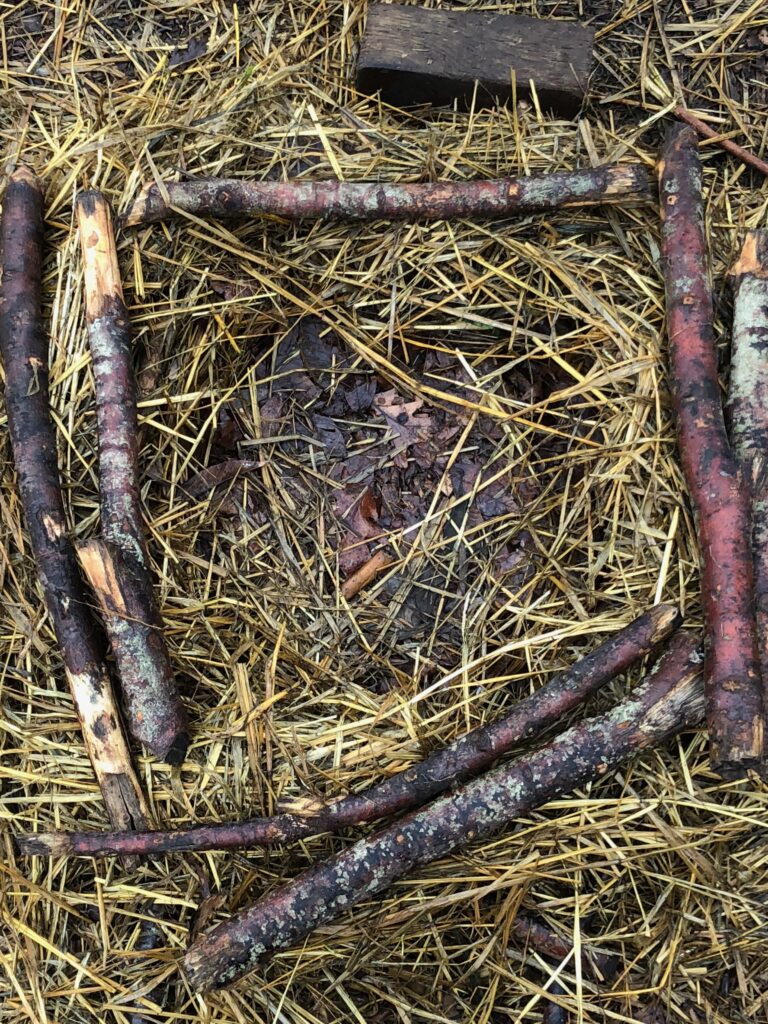
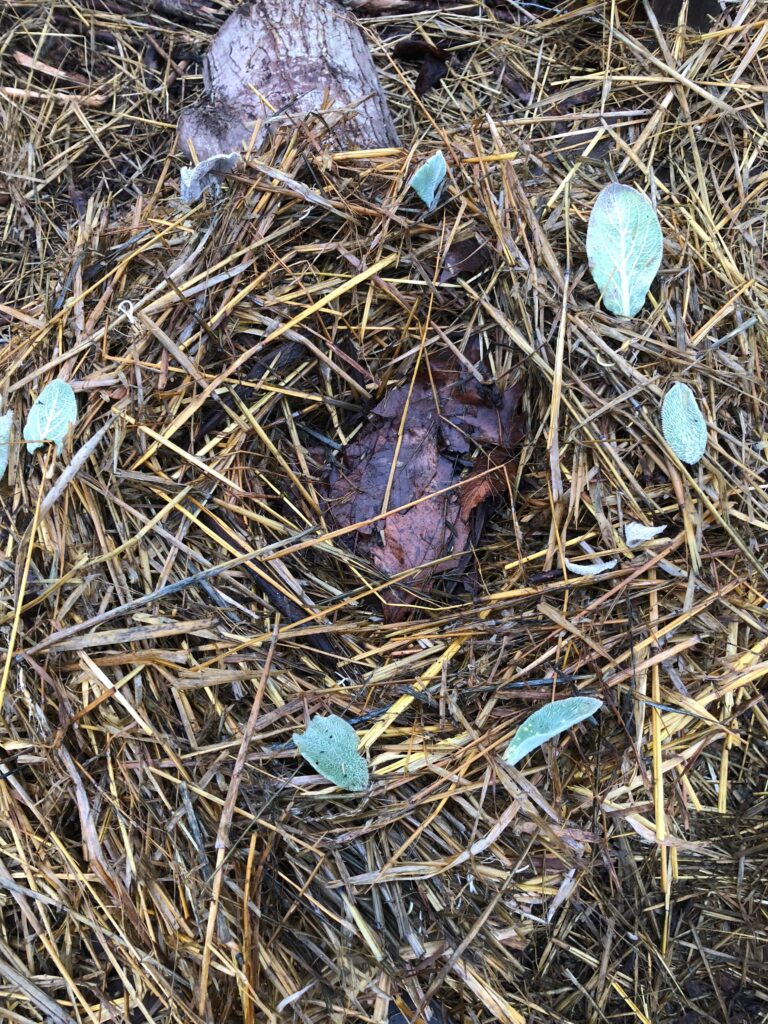
Emergent learning is a valuable tool for student directed inquiry in any outdoor classroom. I often have specific plans for my students that are never quite realized, simply because something more engaging or emergent arises. In our ‘Perfect Nest’ inquiry, students had been playing and using straw bales in the play area that had, as they do, fallen into disarray. Without any specific plan to explore nests and bird habitats, an open inquiry emerged that led to profound learning and understandings. The children had begun to assemble nest like structures with the straw and loose parts in the garden, so I brought our real nests out to examine. We compared the bird made structures to our own straw versions. How did birds build such sturdy nests?
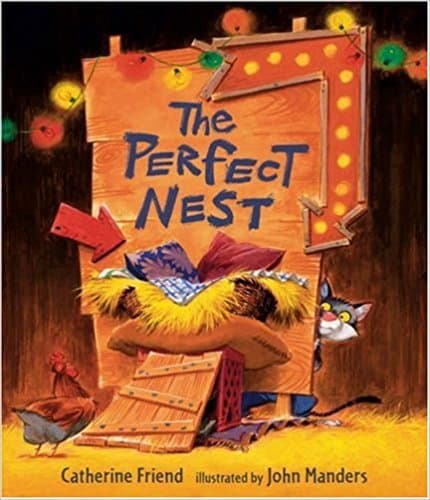
Once I saw how the inquiry was evolving, I selected The Perfect Nest by Catherine Friend. This book is wonderfully written to be enjoyed as a read aloud. The structure of the story is such that the children are engaged in a laugh-out-loud enjoyment of the antics of Jack the Cat, who seeks to build the perfect nest to attract the perfect chicken. I certainly enjoy bringing in fictional texts to round out our experience in the outdoor classroom! It is easy to choose one of the many non-fiction companion texts that reinforce the scientific learning that we engage in daily outdoors, but I find a well selected fictional text, really ignites the story telling that lives in our garden classroom. The Perfect Nest was a great launchpad for story re-telling and creation!
A Perfect Nest Inquiry
After reading the story and playing with straw bales with joyful approximations of nest making, a discussion ensued attempting to define characteristics of the perfect nest. Who would live in the nest? How big should it be? What materials can we use? Having no particular answers, I simply prepared the environment for exploration and construction and stood back. The results were inspiring! In the end, it was a wonderful week of construction, imagination and hands on learning. The children came away with a deeper understanding of the purpose and function of a nest, as well as a respect for the engineering that our bird friends bring to their own constructions!
Curriculum Connections
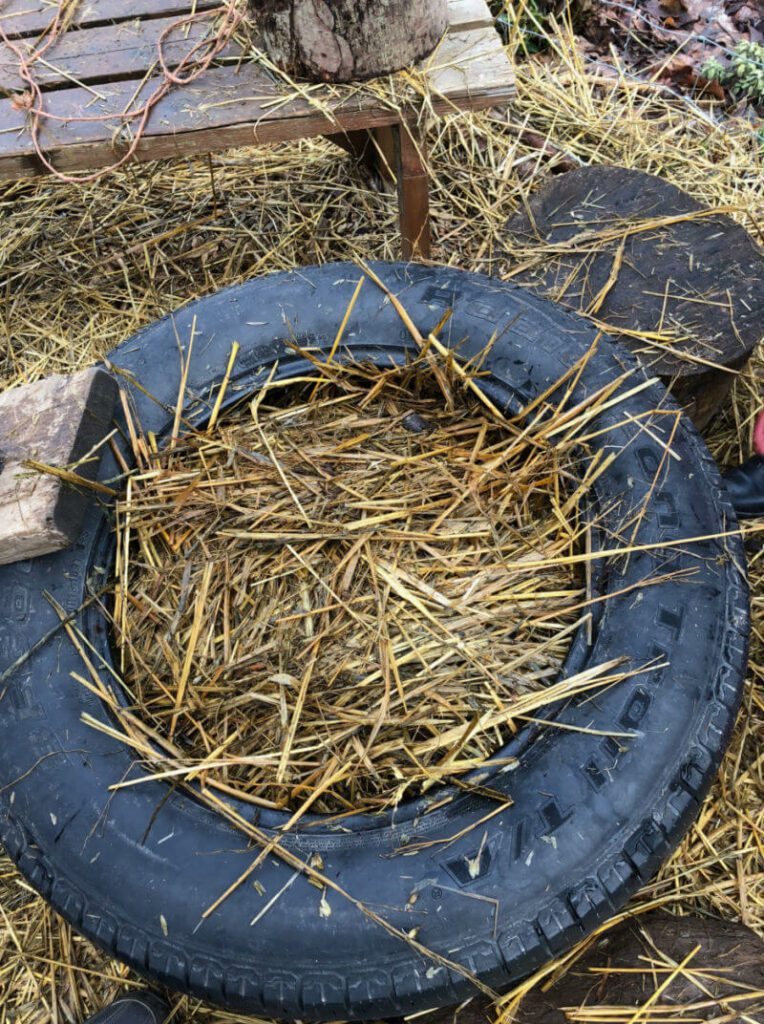
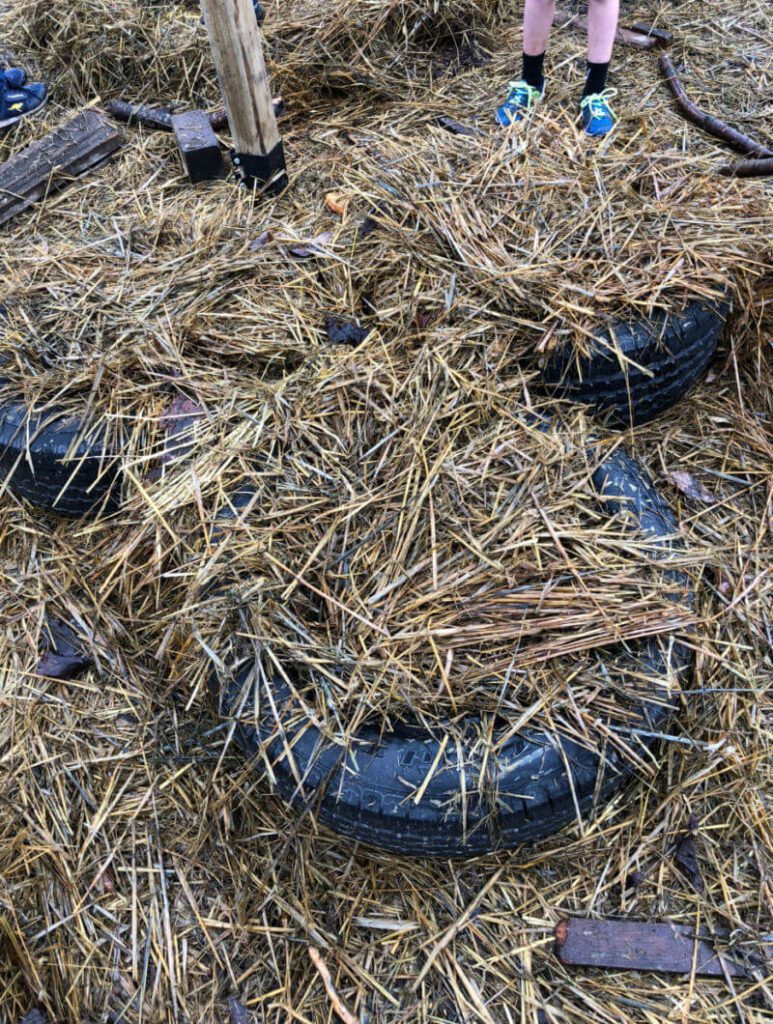
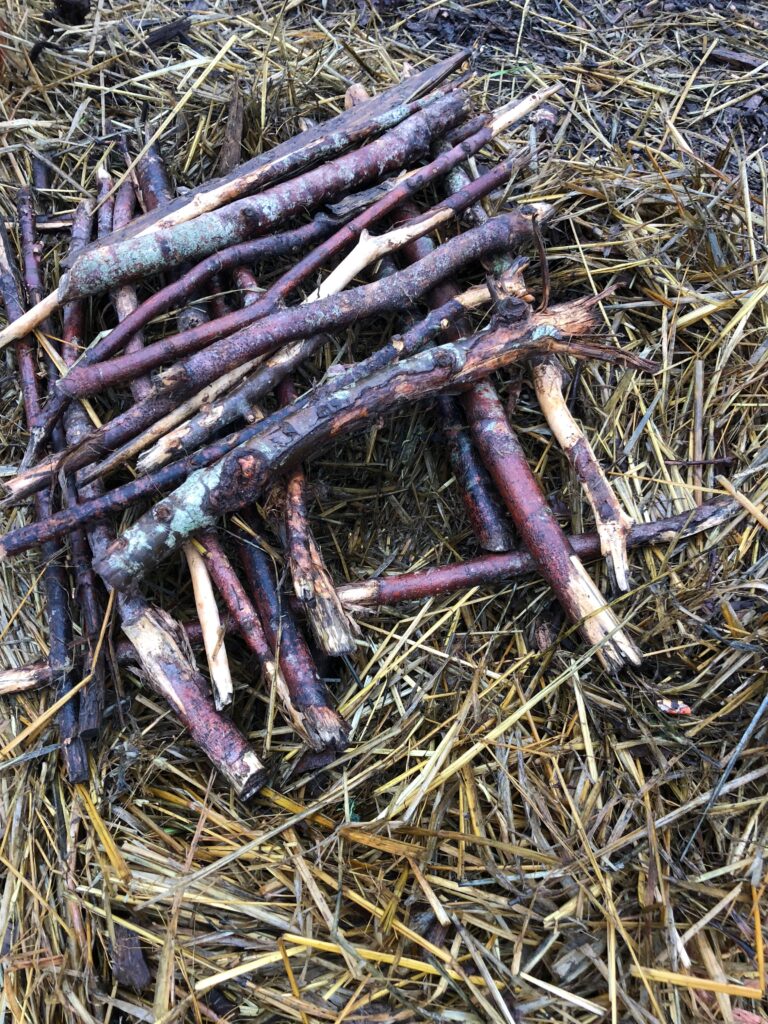
The loose parts assembled for this deign inquiry were donated truck tires, salvaged sticks and wood construction materials, plus the remains of 5 straw bales. In British Columbia, we have a new Applied Design, Skills and Technology curriculum that ties perfectly with this nest building inquiry’s objectives:
In Kindergarten through to grade 3, ADST big ideas support nest building with learning standards that describe how:
- Designs grow out of natural curiosity
- Skills can be developed through play
In grades 4 to 5, ADST big ideas support nest building with learning standards that describe how:
- Designs can be improved with prototyping and testing
- Skills are developed through practice, effort, and action
In grades 6 to 8, ADST big ideas support nest building with learning standards that describe how:
- Design can be responsive to identified needs
- Complex tasks require the acquisition of additional skills
Extending an inquiry
Some inquiries spark play in unexpected ways that continue to evolve over weeks. In my role as outdoor prep teacher, I would see 4 to 5 different classes of children per day. The challenge I struggled with was: Do I leave the structures children have made up, for others to add and further develop? Or do I dismantle them so the next group can work from scratch using their own creative force? There’s no right answer, and the truth is it sometimes depends on which group is coming to the garden next. Some groups needed the inspiration left behind, others would find the pre-constructed nests a hinderance to their own creativity. In the end, investing in a strong text set is my best recommendation for keeping play fresh, while explicitly teaching content specific vocabulary in context. Here are a few of my favourites!
Books About Nests
There are plenty of fiction and non-fiction choices to round out a nest text set in your classroom. If you have a favourite, drop me a recommendation here.