

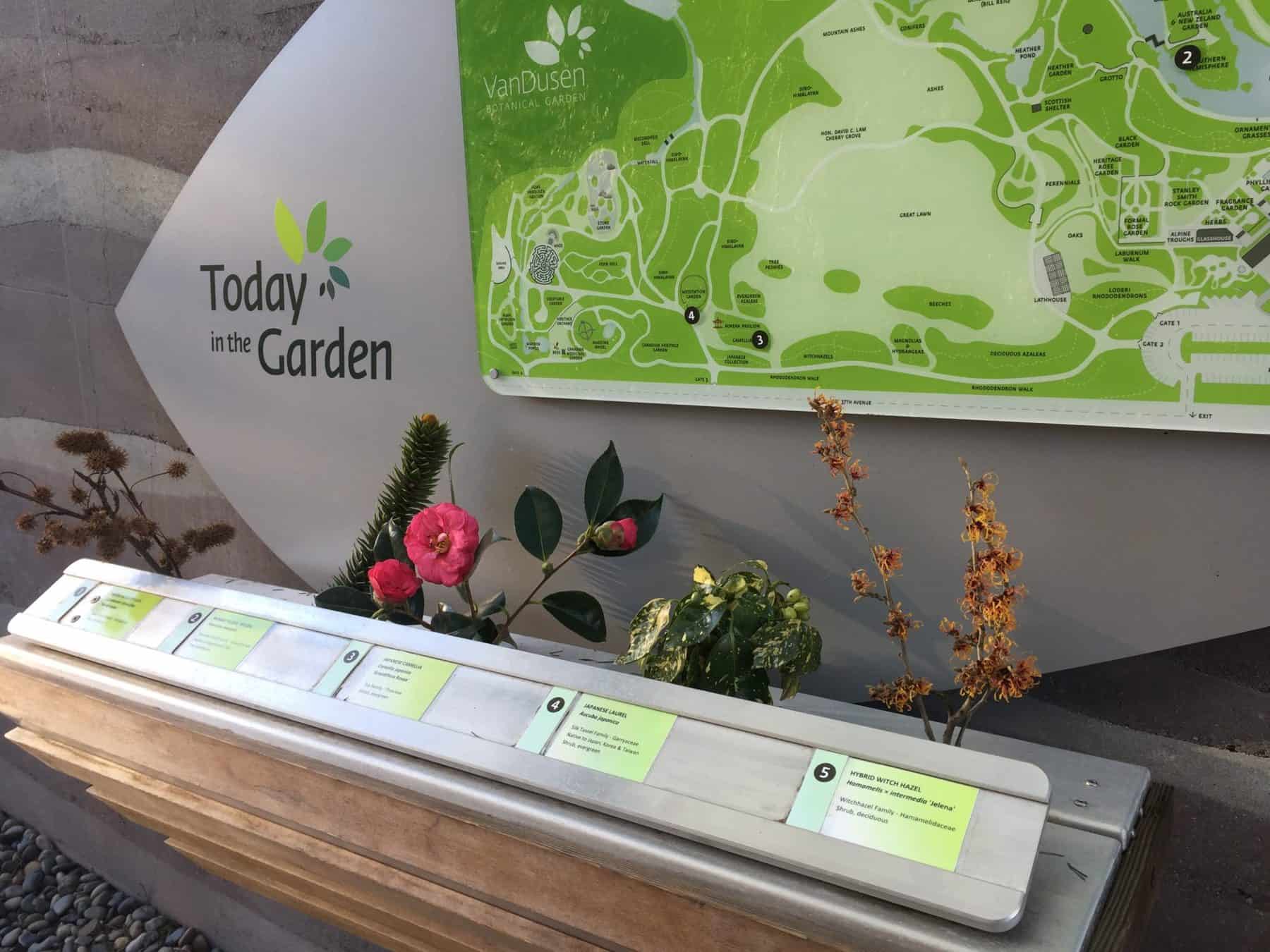
One of my favourite, low prep ways to build content specific vocabulary and background knowledge in the garden classroom, is to prepare garden vocabulary vases that serve as visual aids for a scavenger hunt. Inspired by the entry display into Van Dusen Gardens, a school garden vocabulary vase offers a visual and sensorial entry that support content specific vocabulary acquisition for students of all abilities, while enhancing both children’s and visiting adults’ feelings of connection to the school garden.
Make A School Garden Vocabulary Vase
Vocabulary vases can be free standing, or attached to a fence post. I found these vases at a dollar store and attached them with a simple cleat from the hardware store.
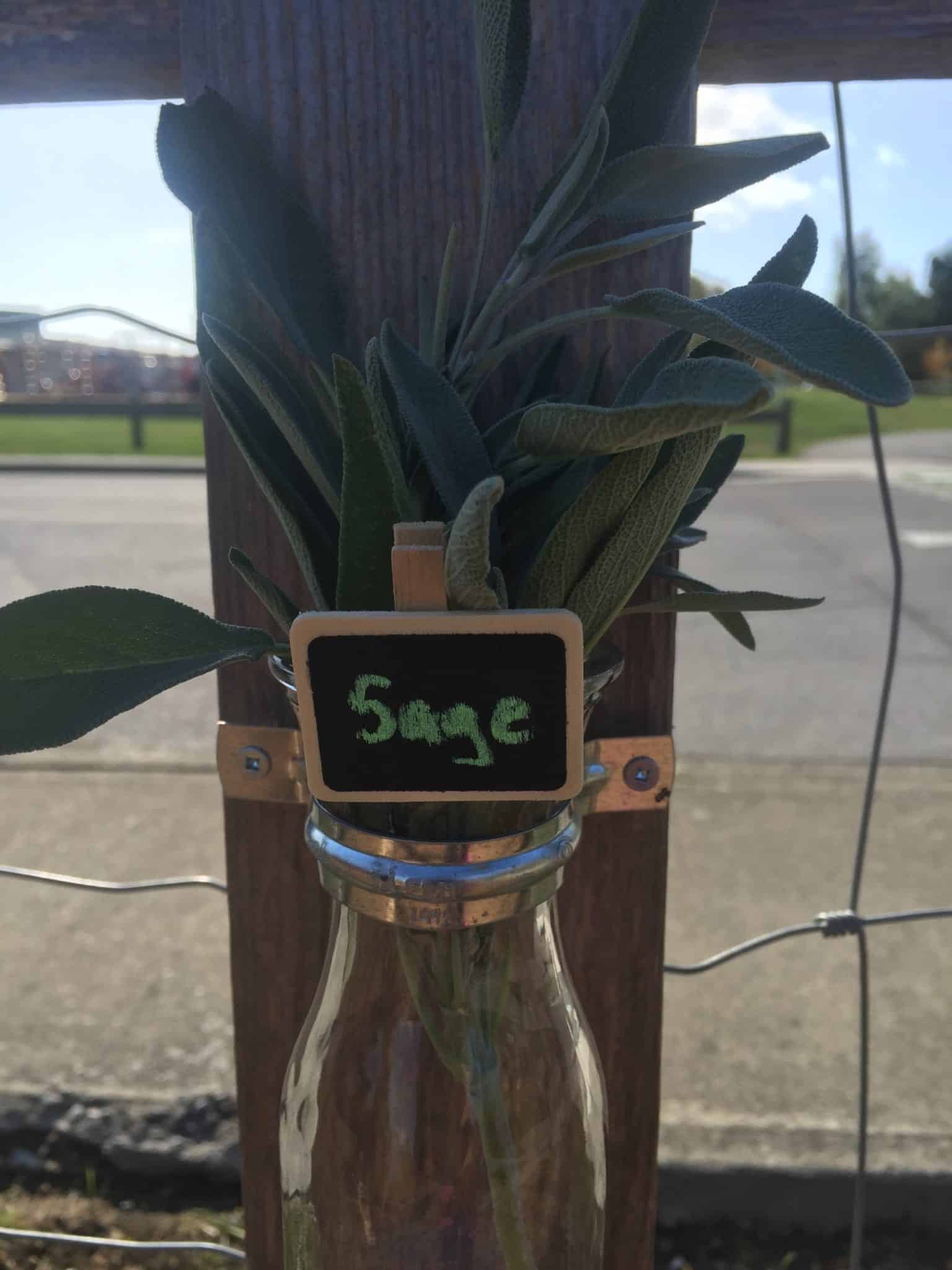
I used a chalk marker on a chalkboard clip to identify the commonly used name of the plant I want children to recognize. I liked the wide mouth on these vases, but they were problematic in the winter when they filled with water and froze.
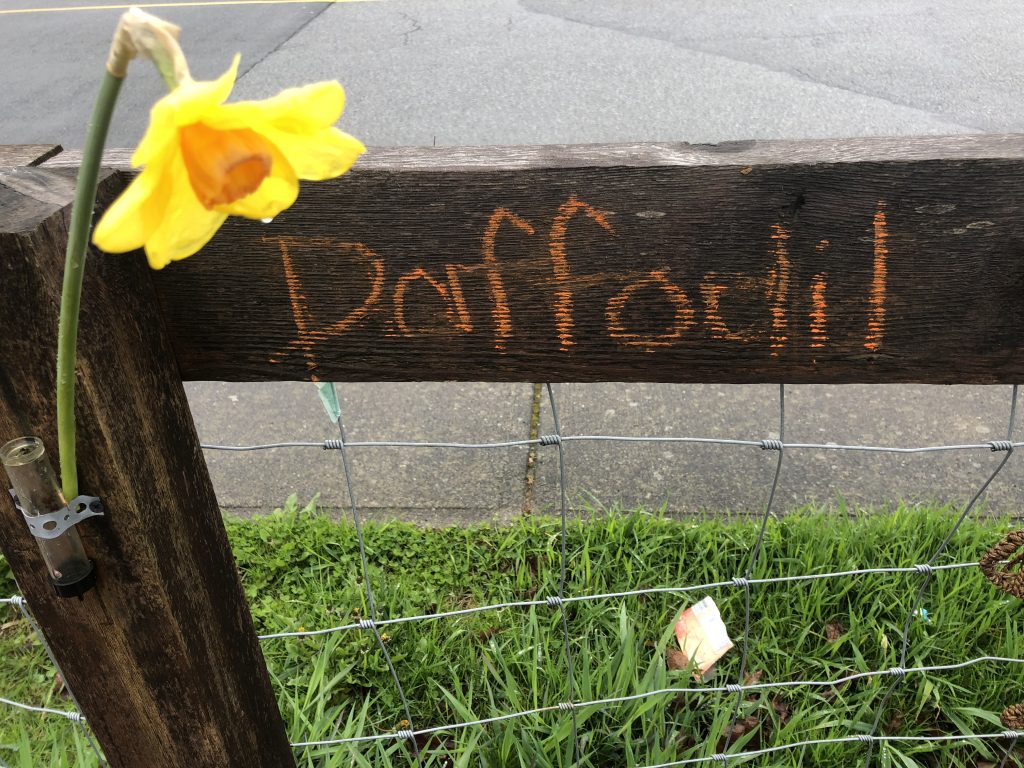
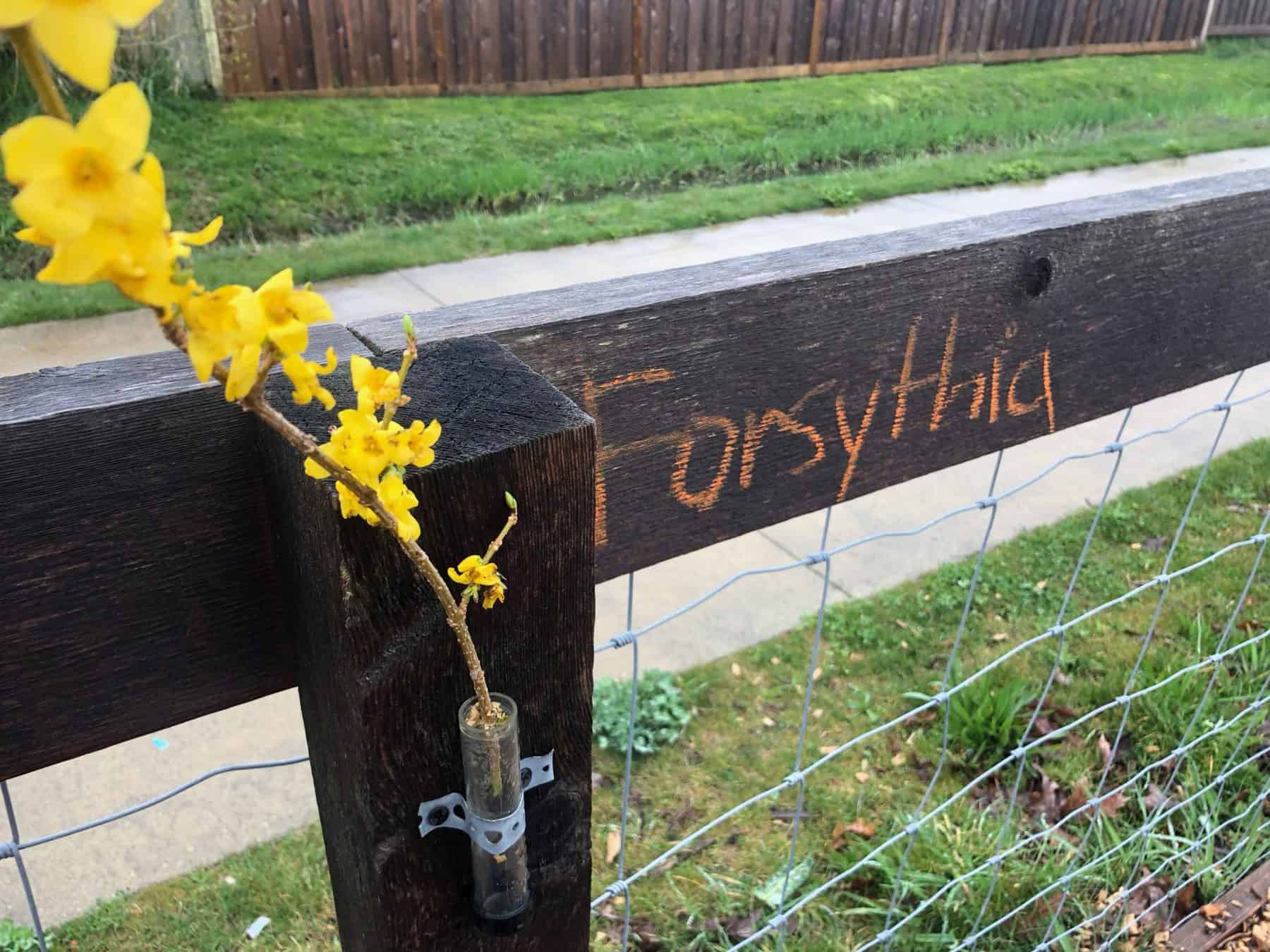
The next experiment with fence post vocabulary vases included these plastic test-tube propagation style prototypes. (Clink link to purchase on Amazon) The words were printed onto the fence post directly and were easily hosed off when the contents changed. These worked very well and were inexpensive to replace!
Word Work and Vocabulary Vases
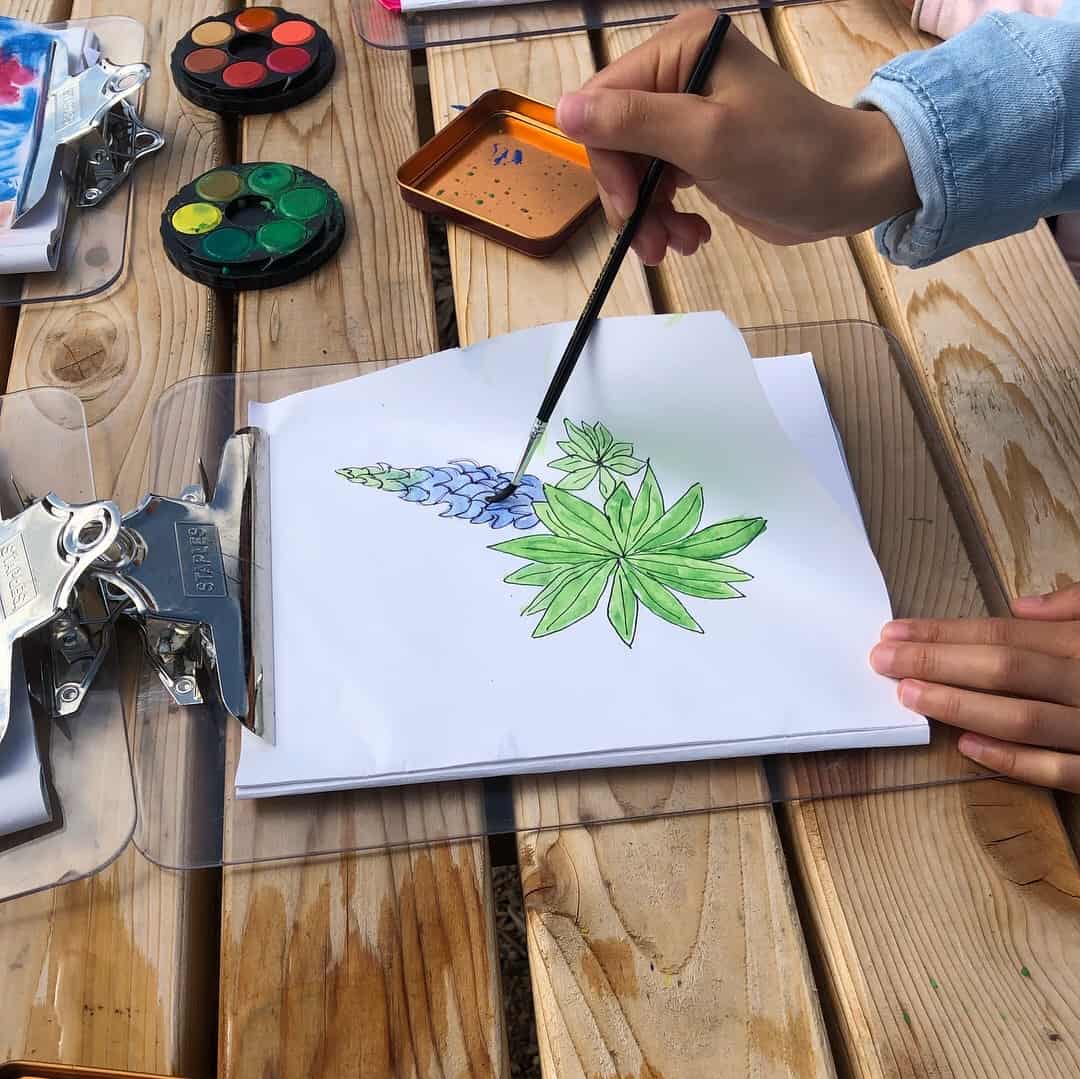
- Children can be asked to sketch, paint or illustrate the plant sample, copy the spelling of the word, and then head out into the garden classroom to locate the plant in its original location.
- Children can work with adjectives, alliteration, or morphology word building tasks to add complexity or consolidate skills from previous vocabulary lessons.
- Our garden beds are numbered so children will add the garden bed number where they found the corresponding crop or plant to complete the task and can begin to map the garden using labelled diagram skills.
- Children can research the origins, medicinal uses, and care needs of plants using non-fiction field guides. A site-specific field guide can be created with accurate illustrations, and relevant details of each plant encountered on the schoolyard.
Related post: Storytelling in Nature
Our gardens are diverse in both native and non-native species of food crops and ornamental pollinator friendly plantings. Teaching children the names of these plants, as well as the less desirable weeds that crop up, gives them a sense of ownership and responsibility for the garden. Once children can begin to name the species of plants in their garden, they feel more connected to the place and are more likely to care for and protect the garden.
Vocabulary Vase Extension idea
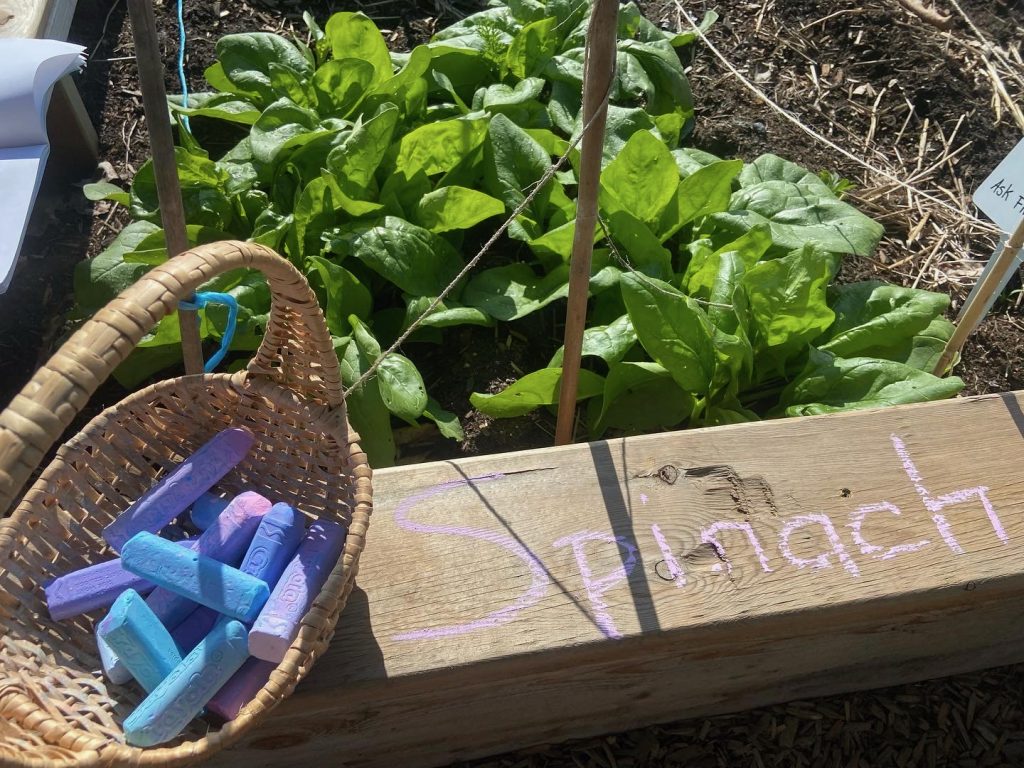
Children who have completed the task, as assigned, can be provided with a basket of sidewalk chalk to accurately label crops, trees & shrubs growing in garden beds (write on the sides or ledges of garden beds) or at the base of trees and shrubs on the sidewalk. This is an endless task as rain and foot traffic tend to wash away their efforts fairly regularly. This task invites the broader school community to come into relationship with the more-than-human biodiversity of your schoolyard and the repetition of noticing and naming crops and plants reinforces relationships with place.
Learn More
If you’d like more ideas on how to support literacy in your garden classroom, book a professional learning session for your school. Contact me here for rates and availability.
And don’t forget to sign up for my newsletter to stay up-to-date on seasonal ideas for growing and learning in your garden with kids.